Hangar Prep GuidesGet the illustrated guide
For US aviation maintenance students and self-study A&P candidates

Stop treating the General test like a pile of flashcards. See the concepts like a mechanic.

This illustrated PDF guide breaks down core FAA A&P General topics with diagrams, plain-English explanations, and original practice-style examples. You’ll work through tools, math, drawings, physics, electricity, materials, weight and balance, and safety without relying on memorized question banks.

Get the illustrated guide

Secure checkout, PDF delivered by email, and a 7-day refund guarantee.

Built for the General test first

The guide focuses on the General knowledge areas that come before Airframe and Powerplant, so you can build a cleaner foundation.

Visual explanations, not copied questions

Every example is written to teach the idea behind the topic, without reproducing real FAA test questions.

Made for practical study sessions

Short sections, illustrated pages, and review prompts help you study in manageable blocks between class, shop time, or work.
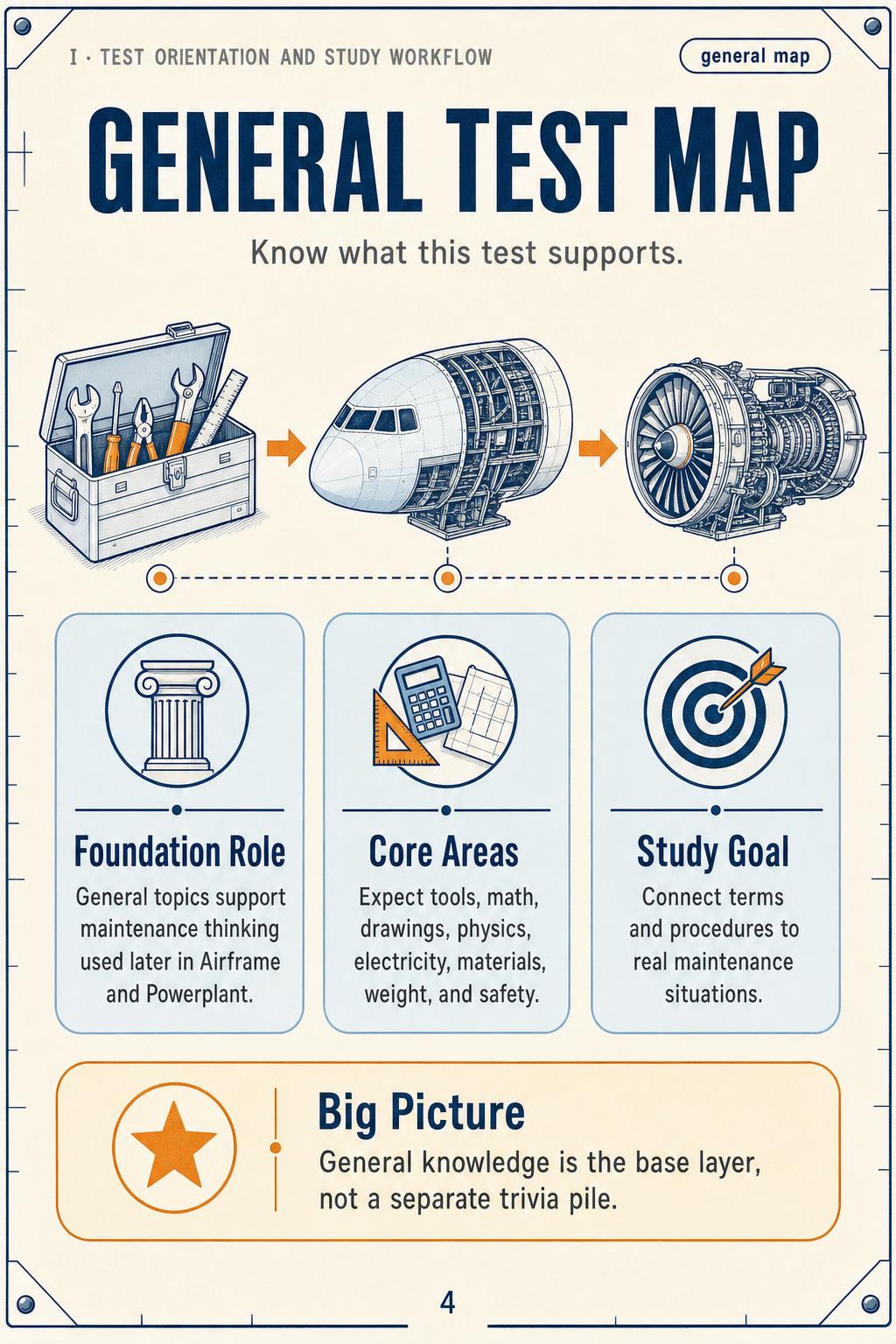
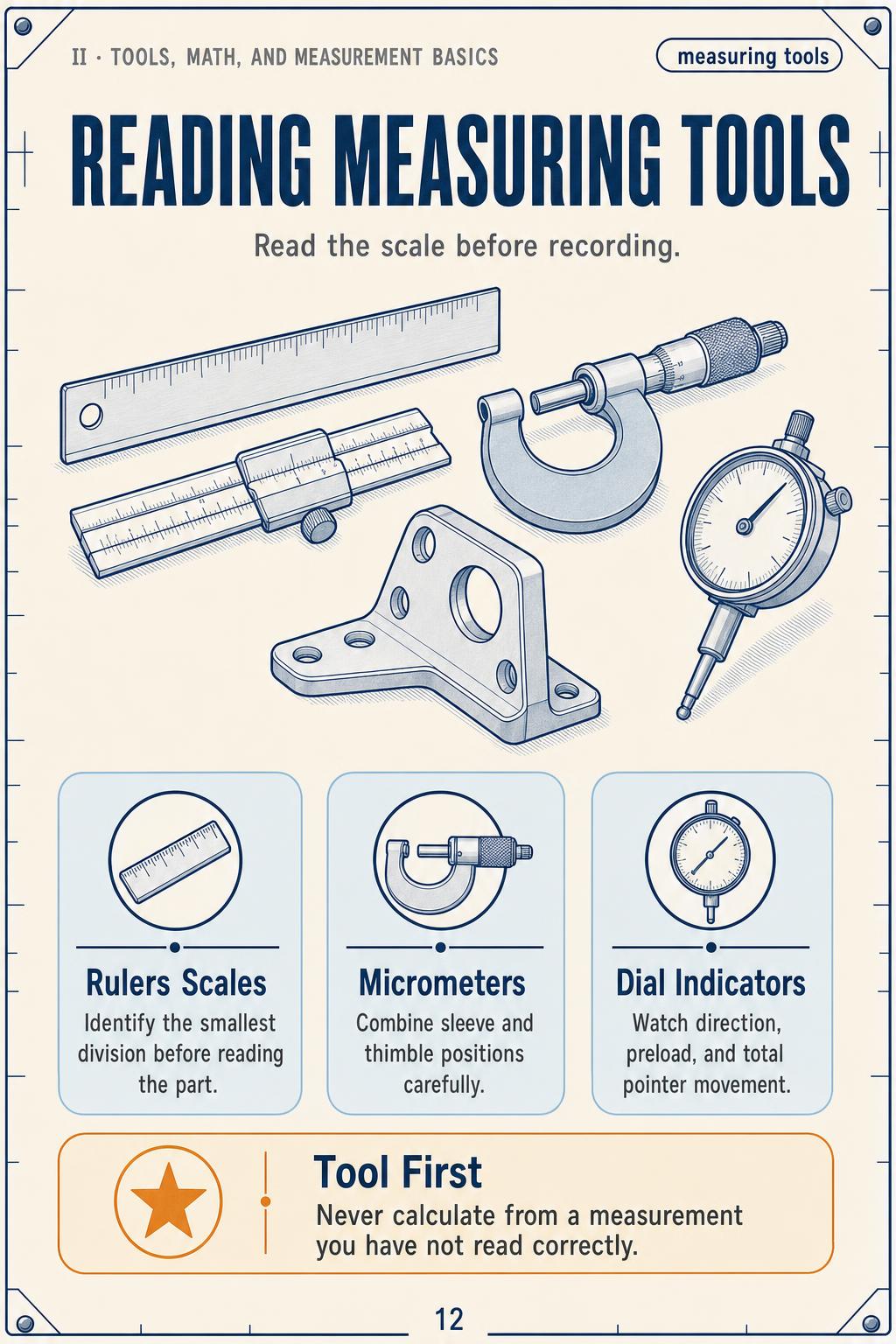
Preview the kind of pages inside

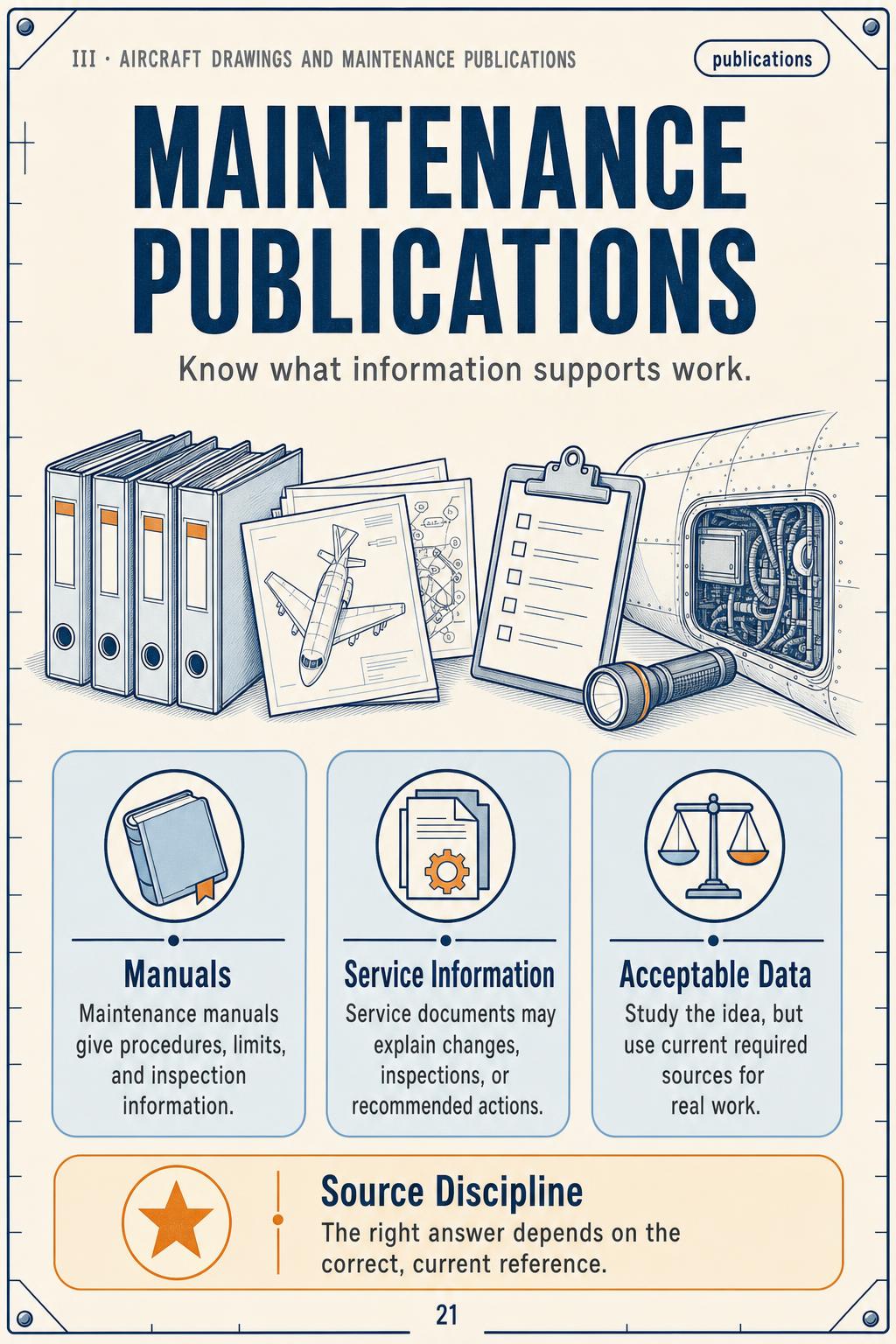
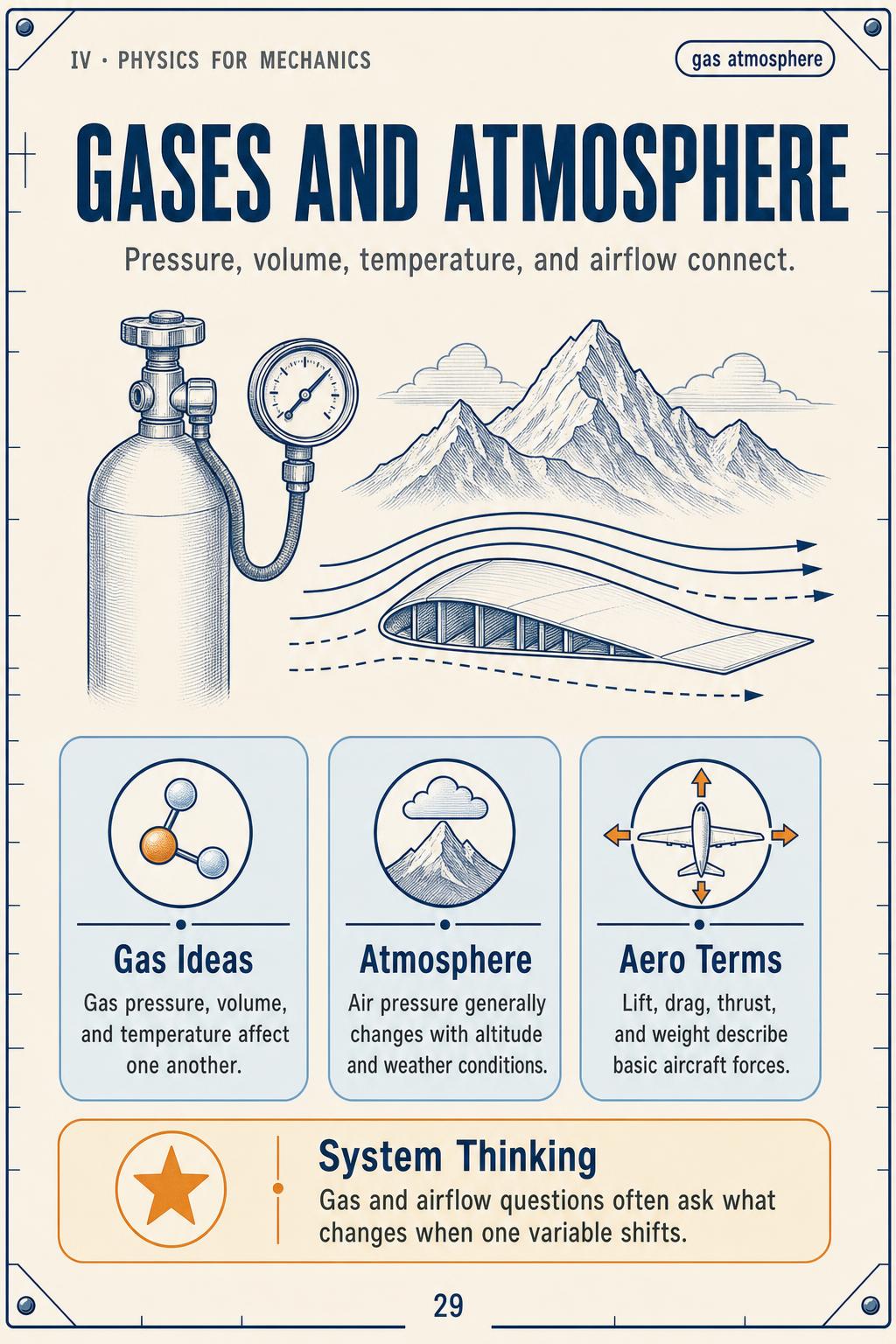
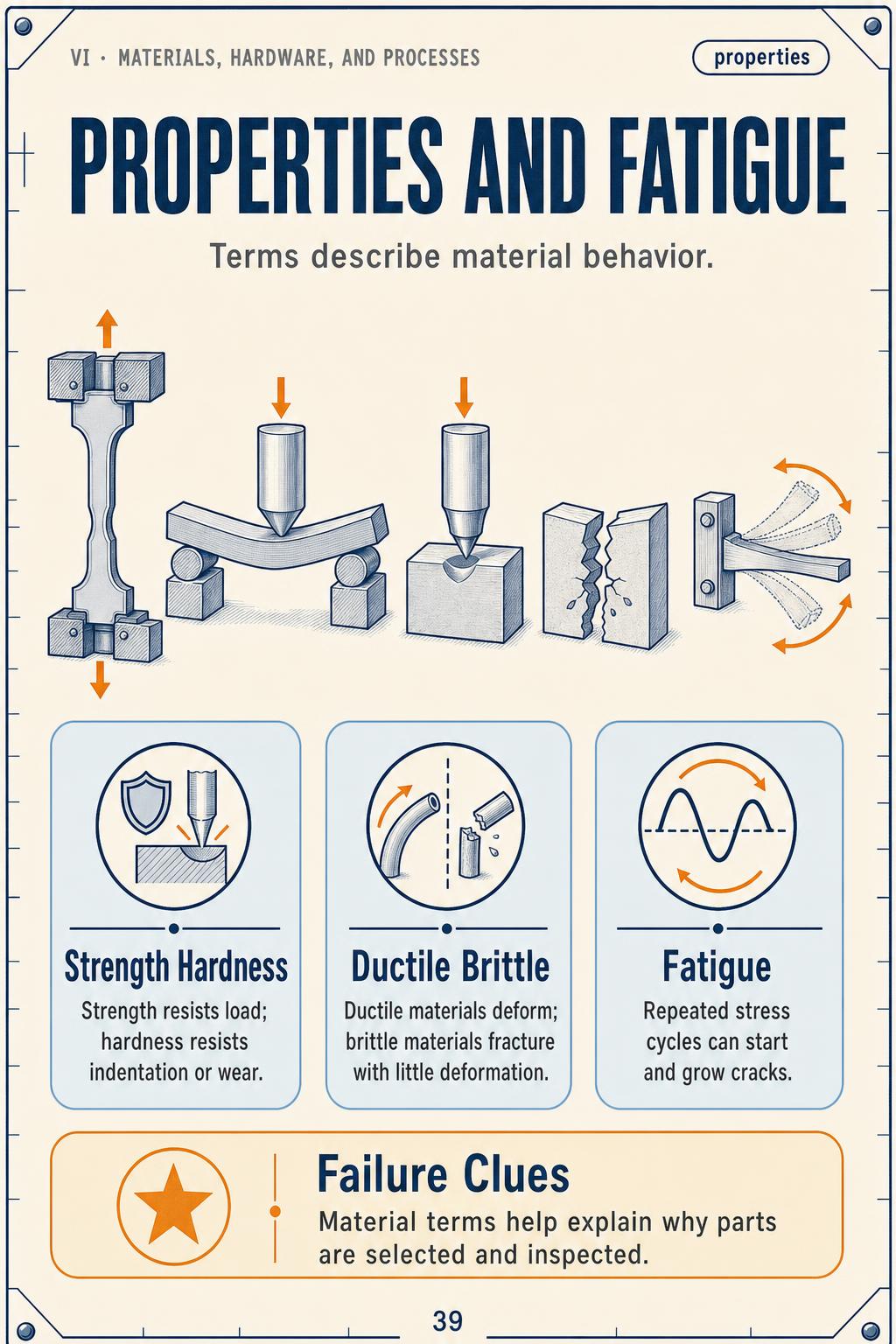
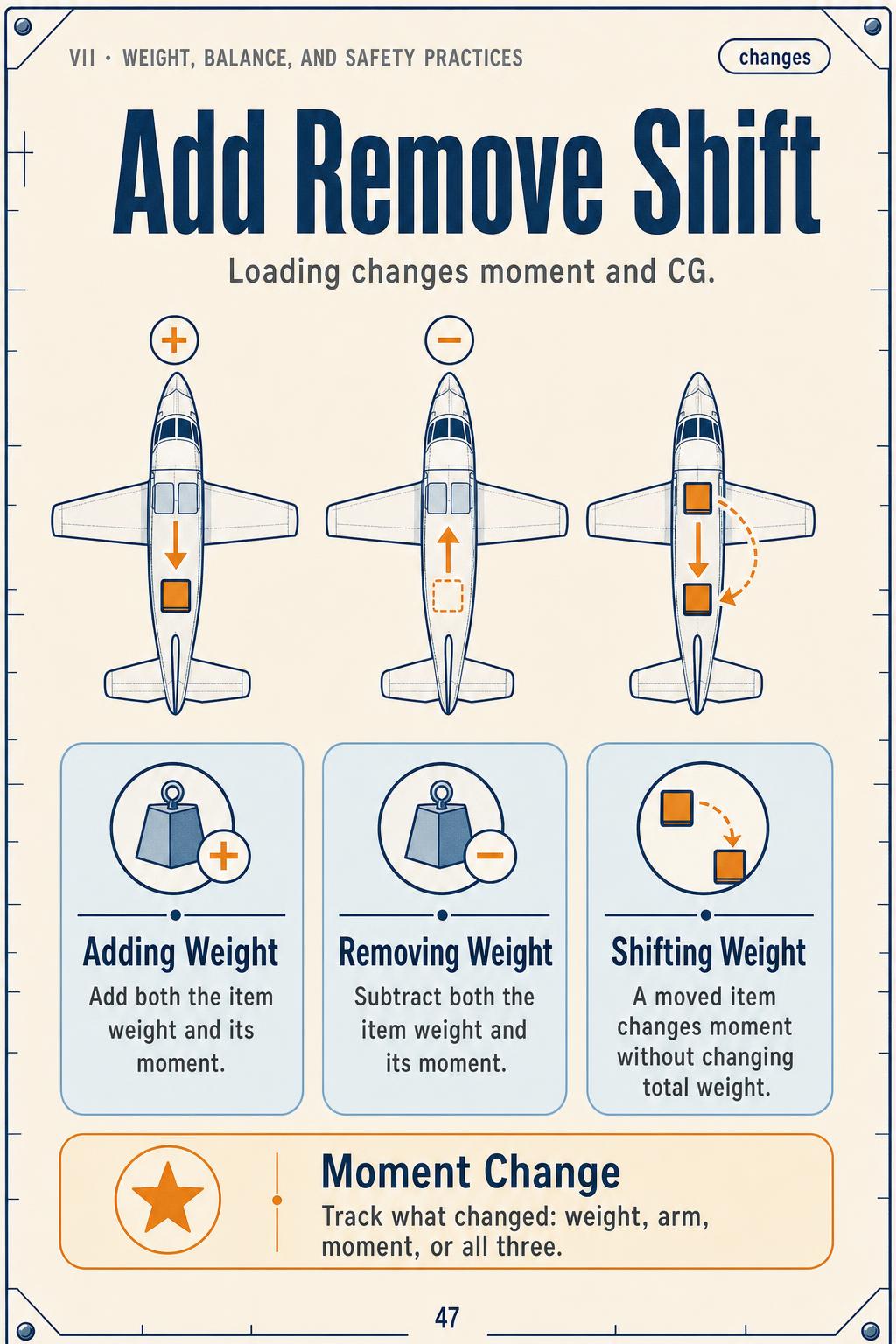
The guide uses clean aviation-style diagrams, annotated formulas, tool sketches, and step-by-step concept pages. The sample pages show how a dense topic becomes easier to follow when you can see the relationship between the parts.

General Test MapReading Measuring ToolsMaintenance PublicationsGases And AtmosphereProperties And FatigueAdd Remove Shift

Sample pages are representative of the guide’s teaching style and are not real FAA test questions.

You know the material is important, but the explanations feel scattered

You sit down after class or work, open a question bank, and start clicking through General test items. Some answers look familiar, some feel like guesses, and the explanation is only a sentence long.

A math problem mentions arm, moment, or unit conversion, and you remember seeing the formula somewhere. But the steps are not shown clearly, so you copy the answer pattern instead of understanding what changed.

Then a drawing, electrical, or physics topic shows up, and it feels like a different subject entirely. You jump from one short answer to another without seeing the bigger system behind it.

The frustrating part is that you are not trying to avoid studying. You are trying to learn in a way that makes sense for aircraft maintenance, where diagrams, parts, measurements, and procedures matter.

That confusion is not your fault. Most generic materials are built around answers, not around showing why the concept works.

A better way to study the same material

Typical question-bank study

  • You see whether you were right or wrong, but the explanation often stops too soon.
  • Topics feel disconnected, so drawings, math, electricity, and safety compete for attention.
  • You may recognize wording without feeling confident about the concept behind it.

To determine the loaded center of gravity, multiply each item’s weight by its arm to obtain moment, add all weights and moments, then divide total moment by total weight. The resulting arm is compared with the approved center of gravity envelope for the aircraft configuration. Positive and negative arms depend on the datum, and rounding must be consistent with the applicable data sheet and loading instructions.

Illustrated guide study

  • You see the datum, arm, weight, and moment on a clear diagram before doing the math.
  • Each topic is connected to a maintenance situation, tool, drawing, or cockpit-adjacent concept.
  • You use original practice-style prompts to check understanding without memorizing copied questions.

What the guide covers

The full table of contents is organized around the General knowledge areas that often slow candidates down. Each part builds from the basic idea to the way it appears in maintenance study.

ITest Orientation and Study Workflow

  • How the General test supports Airframe and Powerplant study
  • What this guide does and does not claim to do
  • A weekly study rhythm for mixed school, shop, and work schedules
  • How to use original practice-style prompts safely
  • How to make a missed-topic log that points to concepts, not just answers

IITools, Math, and Measurement Basics

  • Fractions, decimals, ratios, and rounding in maintenance problems
  • Unit conversions for length, area, volume, pressure, and temperature
  • Reading rulers, scales, micrometers, and dial indicators
  • Formula triangles and when they help or hurt
  • Significant digits and practical tolerance awareness
  • Word-problem setup before choosing an equation

IIIAircraft Drawings and Maintenance Publications

  • Title blocks, revision boxes, zones, and drawing notes
  • Orthographic, isometric, sectional, and detail views
  • Common line types and what they tell a mechanic
  • Basic symbols used in electrical and fluid schematics
  • Service information, manuals, and acceptable data in study context
  • How to read a diagram before trying to answer a prompt

IVPhysics for Mechanics

  • Force, mass, acceleration, and why units matter
  • Work, power, energy, and mechanical advantage
  • Levers, pulleys, gears, and inclined planes
  • Pressure, fluids, density, and buoyancy basics
  • Heat transfer, expansion, and temperature scales
  • Gas law ideas in plain language for maintenance study
  • Atmosphere, pressure changes, and basic aerodynamic vocabulary

VElectricity Foundations

  • Voltage, current, resistance, and power as a system
  • Ohm’s law with labeled circuit examples
  • Series and parallel circuits compared visually
  • Switches, fuses, circuit breakers, lamps, and loads
  • Multimeter basics for voltage, resistance, and continuity concepts
  • Magnetism, induction, and generator-motor vocabulary
  • Battery basics, polarity, and charging concepts

VIMaterials, Hardware, and Processes

  • Ferrous, nonferrous, composite, and plastic material basics
  • Hardness, strength, ductility, brittleness, and fatigue terms
  • Aircraft bolts, nuts, washers, screws, and safetying concepts
  • Rivets and basic fastener identification vocabulary
  • Corrosion types, causes, prevention, and cleaning awareness
  • Non-destructive inspection concepts and limitations
  • Fluid lines, fittings, seals, and leak-awareness basics

VIIWeight, Balance, and Safety Practices

  • Datum, arm, weight, moment, and center of gravity diagrams
  • Positive and negative arms explained with a station line
  • Adding, removing, and shifting weight in sample scenarios
  • Reading a basic loading problem without panic
  • Shop safety, fire classes, and extinguisher matching
  • Hazard communication, personal protective equipment, and housekeeping
  • Ground handling, towing, mooring, and fueling awareness

VIIIPractice Without Memorizing

  • How to identify what a prompt is really testing
  • Common distractor patterns in technical study questions
  • How to write a one-sentence reason for each answer choice
  • Turning missed questions into a study map
  • When to return to a diagram, formula, table, or definition
  • How to decide when you are ready to move into deeper Airframe and Powerplant review

Picture the same study session with the guide open

You sit down with one section instead of a pile of disconnected questions. The page starts with the idea, then shows the parts in a diagram before asking you to reason through it.

When a formula appears, you can see what each value represents. Weight, arm, moment, voltage, resistance, pressure, and force are not just symbols on a line.

When you review a missed concept, you have a place to go back to. Instead of hoping the next question explains it better, you can return to the visual page and rebuild the logic.

Your study time starts to feel more like maintenance training: read the data, identify the parts, follow the steps, and check the result.

By the end, the General test feels less like random trivia and more like the first layer of the A&P path.

Get the illustrated guide

Inside the guide

I

Test Orientation and Study Workflow

This part explains how the General knowledge test fits into the A&P path and how to use the guide alongside your course, handbook, or question bank. After it, you can plan focused study sessions without treating every topic as equally confusing.

II

Tools, Math, and Measurement Basics

This part covers the measurement and calculation skills that appear throughout aviation maintenance study. After it, you can read basic units, work through common conversions, and understand the purpose behind the math steps.

III

Aircraft Drawings and Maintenance Publications

This part turns technical drawings and reference materials into something you can navigate instead of fear. After it, you can identify common drawing features, follow basic schematic logic, and understand how publications support maintenance decisions.

IV

Physics for Mechanics

This part explains the physical ideas behind force, work, energy, pressure, heat, and simple machines. After it, you can connect physics terms to the way aircraft systems and shop tasks behave.

V

Electricity Foundations

This part breaks down basic electricity with diagrams before formulas. After it, you can reason through simple circuits, identify common components, and understand what common electrical measurements are trying to show.

VI

Materials, Hardware, and Processes

This part introduces the materials and shop-process concepts that often appear in General study. After it, you can recognize why a material, fastener, corrosion concern, or inspection method matters in a maintenance setting.

VII

Weight, Balance, and Safety Practices

This part makes weight and balance visible, then connects it to safe shop and aircraft handling habits. After it, you can follow the logic of datum, arm, moment, and center of gravity while keeping safety concepts organized.

VIII

Practice Without Memorizing

This part shows how to review General topics without depending on copied wording or answer recognition. After it, you can use question banks more intelligently and explain missed items in your own words.

The guide ends with a calm review plan that helps you keep studying General topics while preparing for the next steps in your A&P path.

Plus, included free

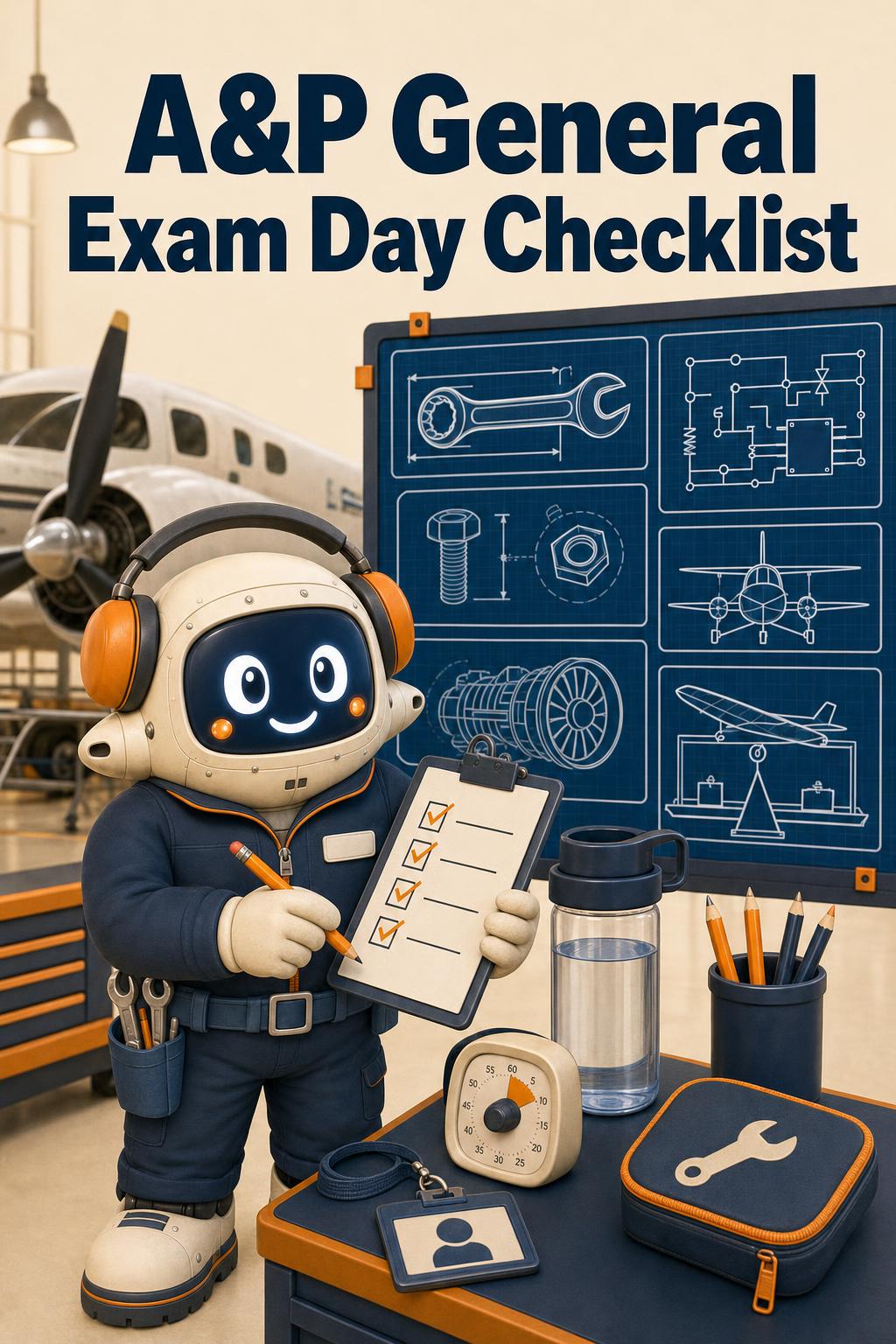
A&P General Exam Day Checklist
A compact pre-test checklist covering supplies, ID, timing, question strategy, and calm review steps.
Free with your purchase · 4 pages
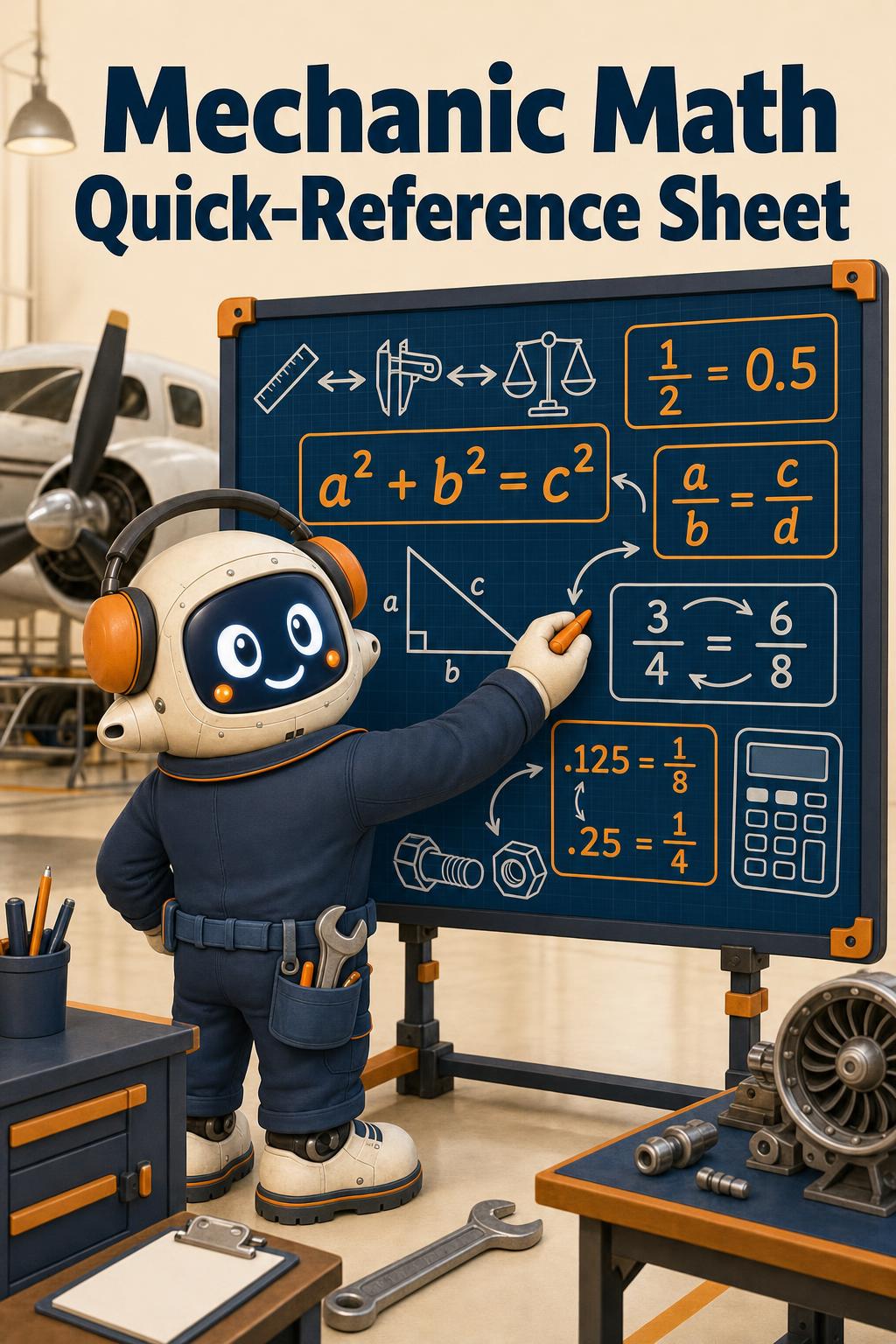
Mechanic Math Quick-Reference Sheet
A visual cheat sheet for formulas, unit conversions, fractions, decimals, percentages, ratios, and common calculator checks.
Free with your purchase · 6 pages
7-Day General Knowledge Review Plan
A simple one-week study schedule that helps organize review blocks, practice questions, and weak-area follow-up.
Free with your purchase · 5 pages
Get the guide and the bonuses

Is this guide a good fit?

Yes, if you want

  • A visual study companion for the FAA A&P General knowledge test
  • Plain-English explanations of why concepts work
  • Original examples that support learning without copying real test questions
  • A foundation before you go deeper into Airframe and Powerplant

No, if you need

  • An official FAA publication or an affiliated training product
  • A guarantee that you will pass an exam
  • A replacement for required school instruction, regulations, manuals, or approved maintenance data

What you receive

Illustrated A&P General Study Guide

  • The illustrated A&P General Study Guide in PDF format
  • A structured table of contents covering the main General study areas
  • Original practice-style prompts and review guidance
  • Clear diagrams, labeled examples, and plain-English explanations

Get the complete PDF guide

US$ 27.90
Get the illustrated guide

Your guide arrives by email within a few hours of the purchase, so please use an email address you can access.

7-day refund guarantee

You have 7 days to read through the guide and decide if it fits your study needs. If it is not the right fit, contact us within 7 days and you will receive a full refund.

Questions before you get it

What format is the guide?

It is a PDF guide with illustrated pages, diagrams, explanations, and original practice-style prompts.

How will I receive it?

The PDF is delivered by email within a few hours of the purchase. Check that your email address is correct at checkout.

Can I read it on my phone or tablet?

Yes. You can open the PDF on a phone, tablet, laptop, or desktop computer with a standard PDF reader.

Is this for beginners?

Yes. It is written for aviation maintenance students and self-study candidates who want the General concepts explained clearly before deeper review.

Can I print the guide?

Yes, you can print it for your own study use. The pages are designed to stay readable in print or on screen.

Does it include real FAA test questions?

No. The guide uses original examples and practice-style prompts to teach concepts without reproducing real FAA test questions.

Is this an official FAA product?

No. It is an independent study guide and is not affiliated with, endorsed by, or approved by the FAA.

What if it is not what I expected?

You are covered by the 7-day refund guarantee. Contact us within 7 days of purchase for a full refund.

Build the foundation before the next test feels bigger

If the General topics have felt scattered, this guide gives you a visual way to slow down, understand the ideas, and study with a clearer plan.

Get the illustrated guide

Secure checkout, PDF delivered by email, and a 7-day refund guarantee.